Category Archives: Psalms

A King who messed up

Psalm 3

Psalm 3 gives us a spotlight on a really low point in David’s life. The story behind the Psalm is in 2 Samuel 15, though the scene is set four chapters earlier when David sins by committing adultery and murder (chapter 11), and God makes it clear there are going to be consequences (chapter 12) – lesson 1: whenever we go against God’s ways, even though He forgives us in His mercy, there will always be repercussions to our actions.

The first consequence is that the child born from the affair dies, but things soon get worse for David. In chapter 13, when one of David’s sons, Amnon, rapes his half-sister Tamar. David is angry about this (verse 21) but doesn’t do anything about it, so Tamar’s brother Absalom takes matters into his own hands, and kills Amnon, and then flees. Eventually David is persuaded to let Absalom return to Jerusalem, who appears to make peace with his father (chapter 14).

But Absalom soon starts to undermine his father’s rule and eventually leads a power coup, and David is forced to flee, and this is the situation in which David writes this Psalm.

I can’t imagine what it must have felt like for David to be betrayed by his own son, particularly knowing that in some way it was a result of bad choices he had made. His response in this Psalm, however, is so challenging to me as he turns to God in his anguish but not in anger. He repeatedly refers to God as LORD, using God’s covenant name (Yahweh) that emphasises God’s goodness.

When his enemies are trying to tell him that God has left him, David calls out to God for protection, because he knows that the LORD has always responded in the past to his cries for help (v4) He was able to rest, despite everything, because God sustained him. He develops this idea into hope for the future, he knows that God has helped him, so he has no need to fear, however many enemies he is facing, because God has answered him whenever he called. He calls out to God, trusting Him for justice to be done to his enemies.

Often those without faith can try to talk us out of ours. We need to always remember what God has done for us in the past, as this knowledge will sustain us and help us to keep trusting Him for our present and our future. God is faithful and will answer when we call to Him. He is the source of justice and salvation.

David’s story is at times victorious and at times heartbreaking, for me this is one of the saddest chapters in his life. His failures as a father and the consequences of his actions make for difficult reading, and remind us that while we can learn a lot from Biblical characters we must remember that they were human and usually screwed up pretty badly at times (apart from Jesus, who, being fully God as well as fully human, was awesome and is literally the perfect role model). But this is a great lesson for us too – David, despite all his screw-ups, is still referred to as being ‘a man after God’s own heart’. What we see throughout the Psalms is that whatever happens in his life, good or bad, David is constantly turning to God, whether in anguish or in praise, or sometimes both. Life is messy, often as a result of our own actions, and we need to learn from David to take all our mess to a loving and powerful LORD and God who will always answer when we call to Him.
IMG_0181

The Anointed One

Psalm 2

This is a Messianic Psalm – meaning it talks about the Anointed One who God will send to rule the earth in the future (Jesus).

It opens up with a rhetorical question – why are people setting themselves up against God? These are people of power – kings and rulers – who are coming together against God. They seem to see Him as a killjoy, setting restricting rules for the sake of it, but the Psalmist undercuts this by using God’s covenant name – the LORD (Yahweh) to highlight His goodness and love. He cares for our wellbeing.

The word Lord also appears not written all in capitals – this is usually a translation of the word Adonai – a name for God that emphasises His authority.

The Psalmist sees the futility of their rebellion – he can see that God has anointed a King – His Son – who will rule over the earth and one day everyone will be subject to Him. But this can be a good thing – those who seek refuge in the Anointed will find it, those who worship Him will be spared.

The Psalms often present this choice to us – our way or God’s way: will we stand against Him or submit to His authority in our lives? This Psalm urges the nations to give up their rebellion and submit to the LORD who will give them refuge – if they don’t they will face His judgement.

I was struck by verse 11: “Serve the LORD with fear and rejoice with trembling” – it brought to mind those similar verses in Philippians 2v12-13, which tell us to “work out [our] own salvation with fear and trembling”. I think we can sometimes forget or even ignore the judgement and holiness of God – this reminds us that He deserves our respect and our worship.

Verse 8 also sent me searching for references: “I will make the nations your heritage”. One verse that suggests Jesus as the object of this promise (the one receiveing the heritage) is Hebrews 1v2, where He is described as the ‘heir of all things’.

What this verse reminded me of is the only clue Jesus gave as to when He would return. In Matthew 24v1-14, the disciples are asking Jesus how they will know when ‘the end of the age’ is coming. Jesus warns them not to be distracted by false teachers telling them the end is coming, then He gives the clue: “And the gospel of the Kingdom will be proclaimed throughout the whole world as a testimony to all nations, and then the end will come.”

Way back in the Psalms, Jesus, the Anointed One, was promised that all nations would be His inheritance, and He won’t return until every nation has been given the opportunity to hear and follow. Which makes our mission clear. We must take the news that Jesus is God’s Anointed One, who will judge those who set themselves up against Him, but will provide refuge to those who fear and trust Him.

IMG_2443

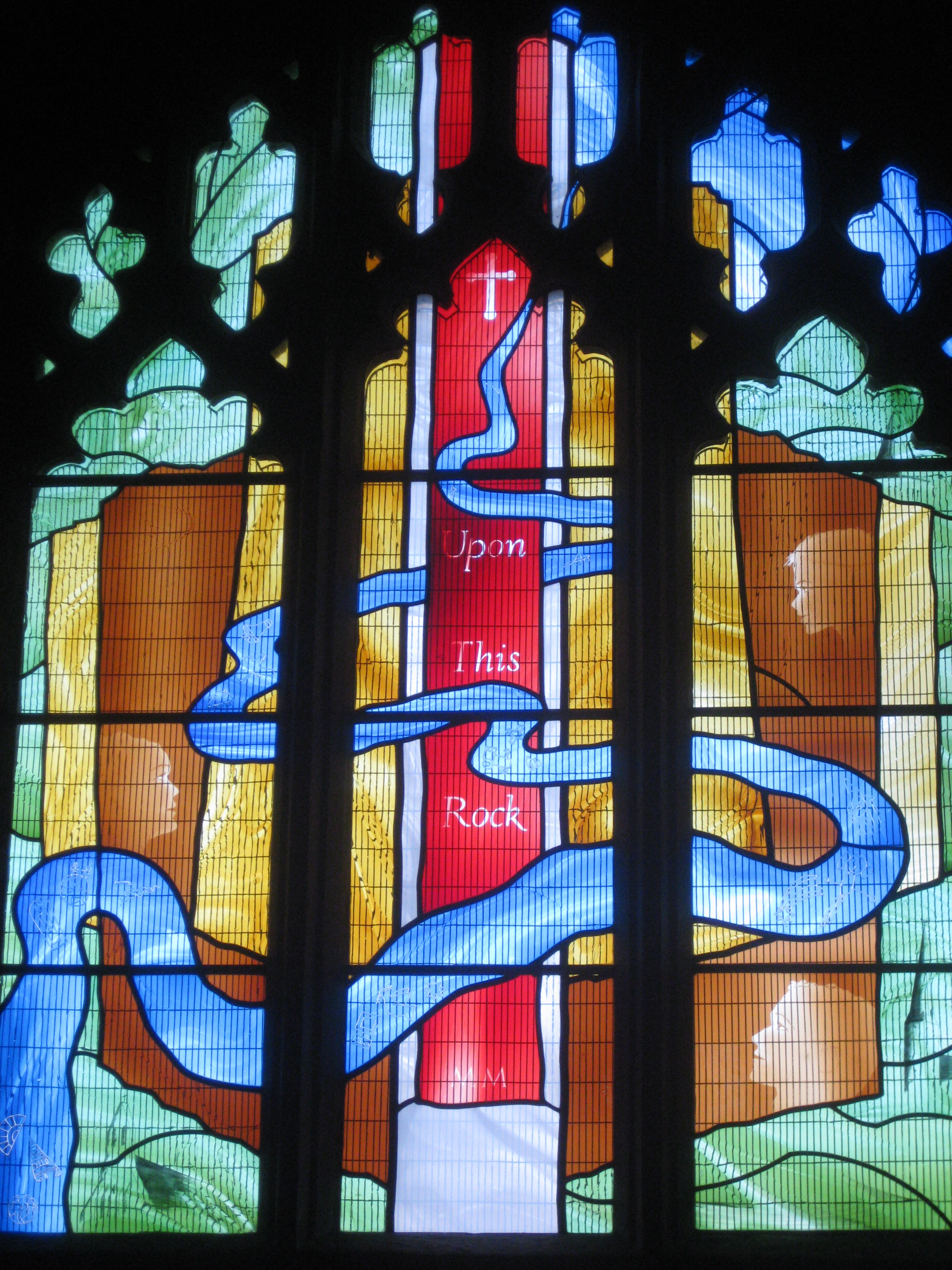
(Photo is of the stained glass window in the chapel at Goodrich Castle, Herefordshire)

Two ways to live

Psalm One (click to read!)IMG_0135

I’m not sure if this Psalm is officially counted as a Wisdom Psalm or not, but it definitely has some wise teaching for us.

The Psalm presents us with two ways to live and the consequences of each choice.

The first picture we are painted is of one who is slowly becoming more entrenched in wicked ways – first they are walking with bad influences and taking their advice. Then they stop and stand and hang around with those who do bad things. Then they sit and stay, not moving on, in the company of mean people.

The second picture is a contrast – and this is the person who God blesses – the one who delights in the Lord and studies His word. This person will not be easily led astray because he is deeply rooted in God, constantly being refreshed, connected to the source of life, as in John 15, and producing fruit (one assumes the fruit of the Spirit – Galatians 5:22-3). This person is full of life and prospers because he has deep roots (Colossians 2:7).

But the wicked person has no roots and quickly blown away. Here today, gone tomorrow.

Now we see the consequences – the wicked person is judged by God and brought down, but the righteous person is seen and known by God, they will grow and be refreshed.

These concepts of ‘wicked’ and ‘righteous’ can sometimes seem a little archaic to our ears, and people are never this black and white. I’m sure this psalm has been misused in the past to encourage young people away from ‘hanging out with the wrong crowd’. For me, however, that is not the takeaway. The man who is blessed is the one who is seeking God’s advice, God’s perspective, not man’s. He is looking for a heavenly mindset. It is so easy to get so used to culture, society, the media, that their messages which bombard us everyday become our standard pattern of thought. And ‘what goes in to the mind comes out in the life’ – we can so easily become the man sitting down in the company of nasty people without realising it.

Don’t get me wrong here – there are a lot of great and insightful and fun television programmes and films and books and art and music, and we can learn a lot from them. But there are a lot of these things (even some of the really good ones) that are at odds with the Biblical lifestyle. We have to make sure we are flooding our minds with the Word, so that that influences our lives more than the culture around us.

When I was at university, I developed a bit of an addiction to that wonderful sitcom, favourite to so many, Friends. (I still love it!) I got to the point where I would chain watch multiple episodes, even fall asleep watching it. And then I started to notice that when my friends were talking about problems in their lives, I could more easily bring up a joke from friends than an encouraging Bible verse. When I thought about my own life and relationships I could more easily relate it to what I was seeing onscreen than what I was reading in God’s word. It started to affect the way I thought about life and so, in the end, I gave myself a break from the show until I had got myself more stuck in the Bible and seeing things God’s way.

This isn’t easy but it is so much the better way, because it brings life and health and refreshment to our souls.